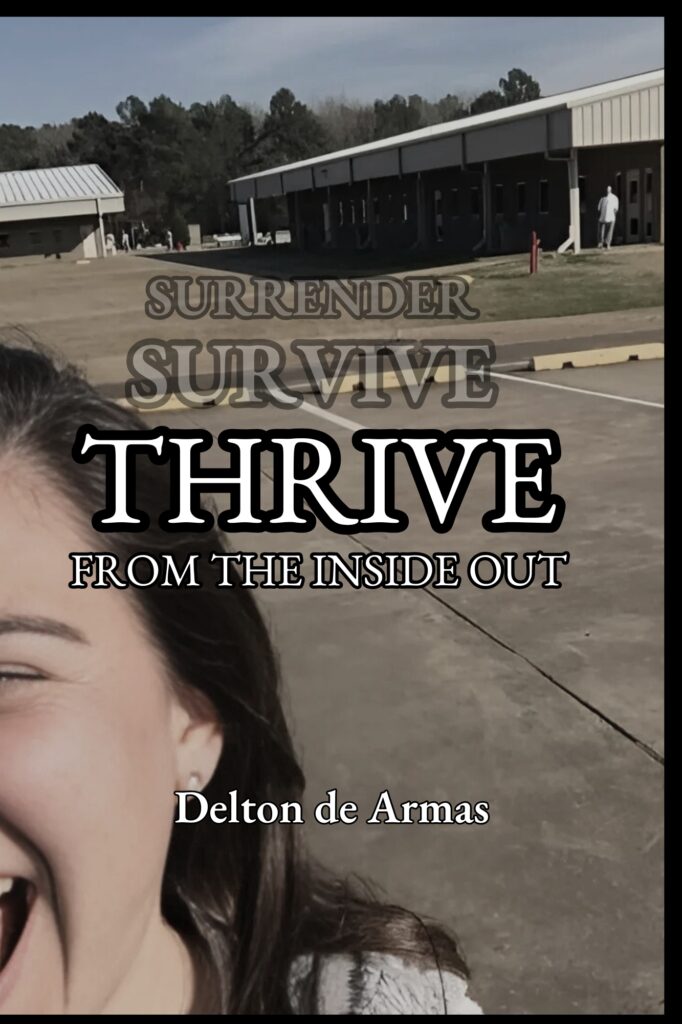
About the Cover
A moment in time
The photo on the cover was taken by my daughter outside the dormitory where I lived for forty-seven months. Look closely and you will find me standing on the porch in the background. A father inside. A daughter outside. Both navigating the reality of incarceration in different ways. In many ways, this book reflects that same idea: learning to thrive in places we never expected.
About the Book
The hard part was never the prison.
I paid a costly price for failure. Forty-seven months in federal prison. Not because I orchestrated fraud, but because my position as CFO required greater oversight, oversight I failed to provide. The judge acknowledged that my role was one of negligence, not intent. I “should have known.”
When I walked through those gates, I expected the hardest part to be the loss of freedom. I was wrong. The hardest part was confronting what I found inside myself: fear. Not the obvious kind. The quiet kind. Fear of rocking the boat. Fear of contradicting a boss. Fear of losing a job I loved with people I loved in a town I loved. A chaplain once preached to us about the sins of self-promotion and self-preservation. Pride I understood. But fear as sin was new to me, and it unlocked everything.
But this isn’t just my story. When I walked into federal prison, I wasn’t the only one losing my freedom. I left behind a family. My wife Pam wasn’t truly widowed, but her experience mirrored it closely enough. My children lost daily access to their father during crucial years. They served a sentence of their own, on the outside.
And then something shifted. I stopped focusing solely on my own suffering and started seeing the needs of others. I prayed for fellow inmates, encouraged others in their faith, looked for ways to help rather than just receive help. Something happened that I did not expect: when my focus shifted to helping them carry their burdens, my own burdens got lighter. That is the paradox at the heart of this book. When we recycle our pain by using it to serve others, we begin to heal.
“Your pain doesn’t have to be wasted. Recycle it. Repurpose it. Let God use it for something greater.”
Thrive: From the Inside Out
The Framework
Three phases. One story.
During my four years at the Federal Prison Camp in Pollock, Louisiana, I lived through three distinct phases. This book is organized around them.
Surrender
Accepting the reality that this was happening. That it wasn’t going to go away. That I couldn’t charm, reason, or will my way out of it. Surrendering my fear, my desire to please, and, most painfully, my right to myself.
Survive
Learning to exist in a world that was completely foreign to me, where nothing worked the way I thought it should. Finding the chapel. Finding community. Finding out that ministry can happen anywhere.
Thrive
Stepping beyond survival. Choosing to live with purpose, not just enduring. Discovering that when you turn your attention to serving others while you are still hurting, something in you begins to change.
Who This Book Is For
This book is not only for people who have been to prison.
The setting is a federal prison camp. But the story is about any season that unmakes you and what God does in the middle of it. If any of these fit where you are right now, this book is for you.
What Others Are Saying
From people who know both the man and the story.
“This book is not a guide to surviving prison; it is a story of how to live out one’s faith regardless of the situation. The truth is that we all experience life’s prisons, but Delton’s story inspires us to persevere with joy, faith, and resolve.”
Dr. Larry Taylor
President, Association of Christian Schools International
“If I were still pastoring, I would initiate a ministry to families of the incarcerated, and this book would be our training manual.”
Dr. Jim Henry
Pastor Emeritus, First Baptist Church of Orlando; Former President, Southern Baptist Convention
“God wants to recycle our pain to serve others who are walking through the same pain. Delton and his wife, Pam, have done exactly that.”
Ron Sylvia
Lead Pastor, Church @ the Springs
“Sacrificial service becomes the surprising pathway to our own healing and freedom. His story isn’t just about surviving hardship. It is a roadmap for anyone seeking to transform from surviving their greatest challenges to thriving in their most meaningful calling.”
Keith Hileman
Pastor, Coach, and Fractional Church Staff & Consultant
Free Resource
One-session discussion guide.
If you want to read this book with a friend, a small group, a men’s group, a prison ministry team, or a church class, start here. These questions are designed for honest conversation, not tidy answers.
Open With This Question
What part of this story, if any, felt closest to something you have lived or are living right now?
Discussion Questions
Delton describes fear, not pride, as the sin that quietly ran his decisions for years. Have you ever recognized fear operating in your own life as something more than a feeling?
What does surrender mean when the situation does not change on your timetable? What have you had to let go of that you are still learning to release?
Delton writes that when he started focusing on others rather than his own suffering, the burdens got lighter. Where have you experienced that, or where have you resisted it?
His family served their own sentence on the outside. Who in your life has carried the weight of something they did not cause? How has that shaped how you see them?
The book ends with an invitation: recycle your pain. What chapter of hardship in your own life might God want to use to help someone else get through theirs?
Close by asking God for honesty, courage, and the grace to serve somebody else while you are still in the middle of your own hard place.
Keep Going